A recent Adobe Analytics report found that shoppers referred to retailers through LLMs like ChatGPT generated 53% more revenue per visit than shoppers coming from non-AI sources.
Until now, much of the AEO/GEO conversation has focused on making sure brands simply show up in these conversations. However, this data suggests consumers are using LLMs to make sense of options, compare tradeoffs, build confidence, and decide what feels worth buying. By the time they click through to a retail site, they may already be further along in the decision than a traditional site visitor.
What the Path to Purchase Looks Like Now
For years, the path to purchase usually involved a lot of independent research. A shopper might search for a category, open multiple websites, scan reviews, compare a few options, and slowly narrow the field before making a decision.
By the time that shopper landed on a brand or retailer’s website, they could be at any point in the journey. Sure, they might be ready to buy, but they could just as easily be casually browsing, checking prices, validating reviews, or still trying to understand what they needed.
Now, AI tools are pulling more of that research and evaluation into one place.
When a shopper turns to an LLM, they are often handing over the research process itself. They can ask a question, explain their needs, compare options, pressure-test the recommendation, and narrow the field before they ever click through to a website.
In this situation, when that shopper finally does land on a retail site, they may be arriving with more context, more confidence, and a clearer reason to buy.
That shift helps explain why AI-referred shoppers may be generating more revenue per visit. When more of the research happens inside the AI interaction, the shopper who clicks through may already be further along in deciding what they want and why.
Who Is Actually Driving This Shift?
Langston’s own research suggests this behavior is most likely showing up first among consumers who are already more engaged with the category and more likely to adopt new trends early.
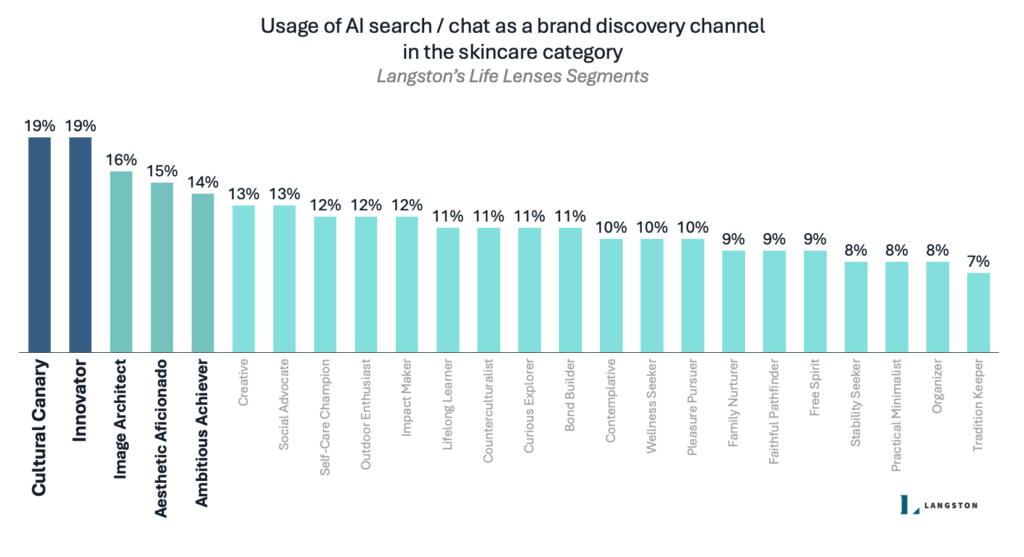
Each Langston Landscapes studies include Life Lenses, an attitudinal segmentation that helps identify different consumer mindsets within a category. In skincare, two of our most trend-forward segments, Cultural Canaries and Innovators, are the most likely to use AI search and chat to discover new brands.
Tom Anderson, one of Langston’s partners, is a good example of this mindset. He is category-curious, open to experimentation, and comfortable using an LLM to inform a purchase decision.
After chatting with an LLM about skincare, he discovered Naturium, evaluated the recommendation, and decided to buy.

This is a simple example of what happens when discovery, evaluation, and purchase consideration start to happen in the same AI interaction.
Early Adopters Are Ahead of the Curve, Not the Whole Market
This shift should feel urgent for brands, but the market is not as far along as the AI conversation can make it seem.
In his “AI Eats the World” presentation, Ben Evans notes that OpenAI has reported more than 900 million weekly users, but only 5% are paying. Many people use LLMs occasionally, but far fewer use them daily, which is the bar major social platforms clear easily.
We see a similar pattern in our skincare study. Cultural Canaries and Innovators are leading in AI search and chat usage for brand discovery, but the behavior is still far from mainstream.
That puts LLMs near the beginning of the classic technology adoption curve. The people using these tools today tend to be more engaged, more curious, and more willing to experiment. They are not the whole market, but they may be some of the most valuable shoppers in it right now.
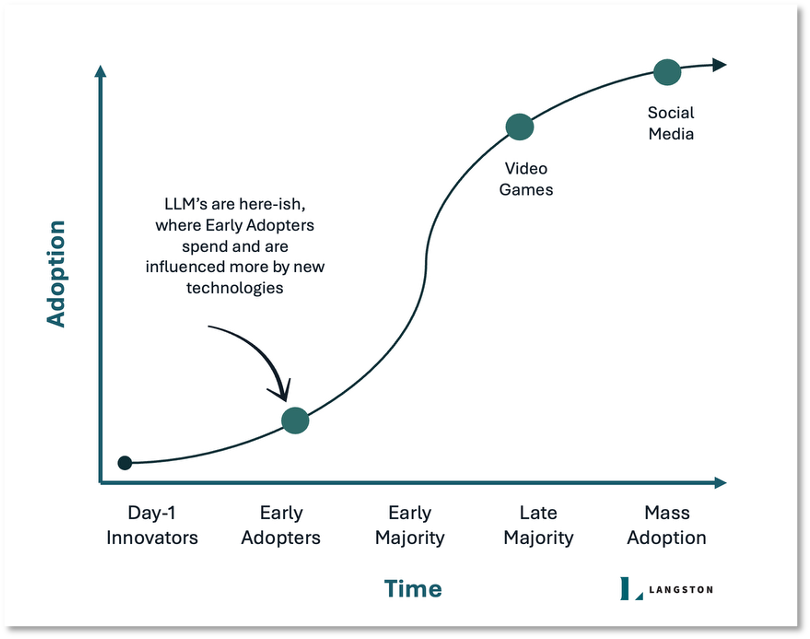
That also helps explain the Adobe finding. A smaller group of highly engaged users can still drive strong revenue per visit, especially if they are using LLMs to research, evaluate, and build confidence before they reach a retail site.
For brands, the opportunity is in the timing. The audience is still relatively small, but it is engaged and close to purchase. As adoption grows, the average LLM-assisted shopper may become less distinct from the average shopper overall. A breakthrough use case could accelerate adoption quickly, and as more brands invest in GEO, competition for AI visibility will make the early advantage harder to maintain.
What This Means for Your Brand
Getting ahead in GEO means learning how to show up in an ecosystem where users are still highly engaged and the rules are still being shaped. There is uncertainty in that, but there is also opportunity for brands willing to start learning before the space becomes more crowded.
That includes the work many brands are already prioritizing, like understanding how AI tools find, interpret, and surface information. But it also includes the same marketing discipline brands have always needed: understanding your consumers, the problems they are trying to solve, and the role your brand can credibly play in helping them.
When shoppers ask AI tools for help, they are often asking in the language of needs, problems, goals, and tradeoffs. They are looking for guidance before they know which brand to choose.
That gives marketing and insights teams a new set of questions to bring into brand strategy conversations:
- What questions does your brand actually answer?
- How reputable is your brand as a source of truth in your category?
- How useful is your brand for the problems people are trying to solve?
- How well built and referenceable is your content, so an AI tool can surface it clearly?
- How closely does your messaging reflect the way consumers describe their needs?
Even as AI changes how consumers discover and evaluate brands, winning in an LLM environment still requires a human-centered approach. Brands that respond with clarity, credibility, and a genuine understanding of consumer needs will be better positioned to earn consideration in this new environment.
If you are trying to understand which shoppers in your category are already turning to AI first, and what they need to hear to convert once they get there, that is exactly the kind of question Landscapes is built to answer. Reach out to learn more.