The financial impact of the 2026 FIFA World Cup is coming into focus, and the results reflect a familiar pattern across the broader marketplace. Higher-income consumers continue to drive a disproportionate share of growth, one of the clearest signs of a K-Shaped economy.
World Cup ticket prices reached historic highs, fueled by dynamic pricing, limited availability and extraordinary demand. The pricing strategy drew plenty of criticism, but top-quartile spenders were ultimately willing to pay. As a result, the tournament came close to selling out.
Hotels are celebrating a profitable World Cup, too. But their success wasn’t necessarily as straightforward as their ability to fill more rooms.
The industry’s preferred performance metric is “revenue per available room”, or RevPAR. In some host cities, fewer rooms were booked during the World Cup than during the same period in 2025. However, hotels raised nightly rates far enough above typical levels that overall revenue still exceeded expectations.
As Gregg Caren, CEO of the Philadelphia Convention and Visitors Bureau, explained:
“Hotel owners are not in the occupancy game. That’s a thing of the 1980s and 1990s. It is a revenue game.”
Targeting consumers who were willing to spend more translated into strong revenue for hotels. But as consumer insights professionals, we cannot help asking a larger question:
Is prioritizing revenue over demand a sustainable strategy for hotel brands?
We explored our syndicated consumer data to better understand the travelers behind this trend and what their behavior could mean beyond the World Cup.
Premium travel is not limited to the wealthiest consumers
We first wanted to determine whether a willingness to pay premium hotel rates was simply a function of income.
Our Travel and Accommodations Landscapes study suggests it is not.
Approximately one in three travelers with household incomes between $75,000 and $150,000 are open to paying at least $250 per night for a hotel. That is not dramatically different from the willingness we see among travelers with even higher incomes.
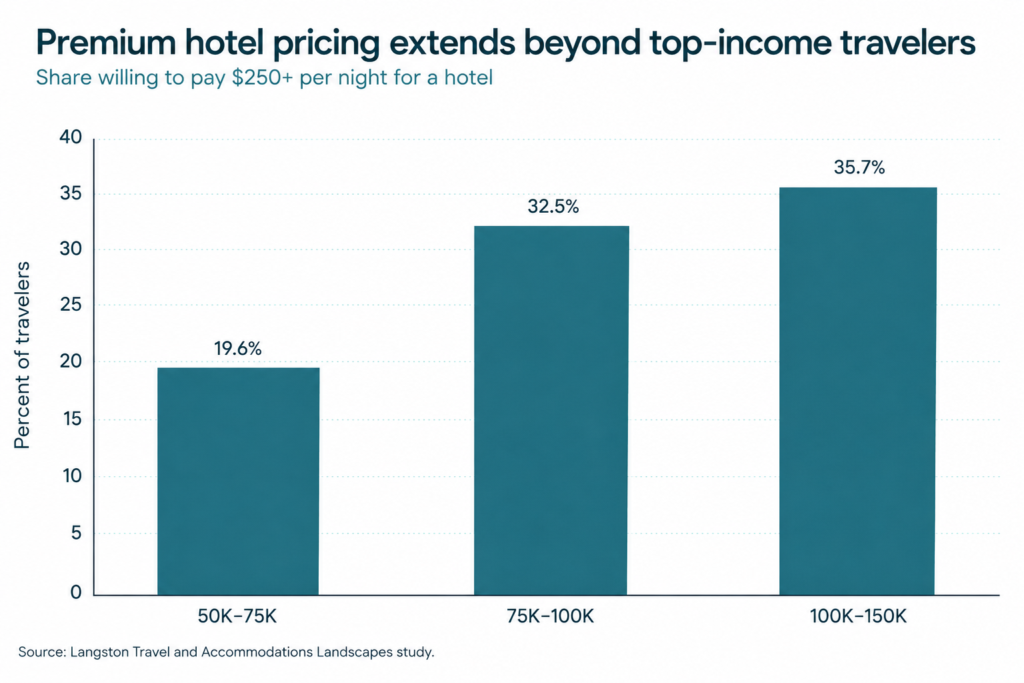
These travelers are not necessarily budget-constrained, but they are also not the stereotypical top-quartile spender.
The findings suggest that premium spending is influenced by more than income alone. The occasion, the perceived value of the experience, and the traveler’s underlying priorities all matter.
To explore that more closely in the context of the World Cup, we looked at one particularly relevant consumer group.
Millennials’ travel priorities were well-suited to the World Cup
According to our Trend Sizing study, 28% of Millennials were traveling or planning to travel to a World Cup match or related event, the highest percentage of any generation. Among those Millennial World Cup travelers, 59% planned to stay in a hotel.
As expected, this group skewed more affluent than your average Millennial. Approximately one in three had household incomes above $150,000, compared with one in five Millennials more broadly.
But income is only part of what made them an attractive audience for hotel brands seeking to maximize RevPAR.
Their attitudes toward travel also made them more likely to accept the tradeoffs associated with an expensive, high-demand event.
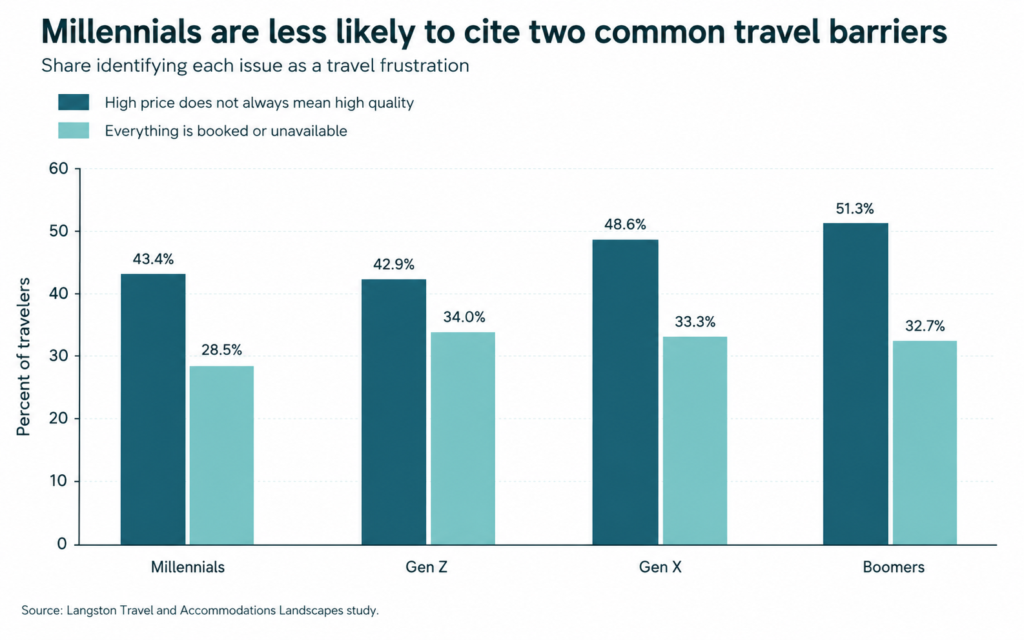
When asked about common travel frustrations, Millennials were less likely than older generations to say that “a high price does not always translate to high quality.” This suggests that unusually high World Cup hotel rates may have created less hesitation for them than for other travelers.
Millennials were also the least likely generation to cite a lack of availability as a frustration. They may be more comfortable considering a wider range of hotels or alternative accommodations and adapting when their first choice is unavailable.
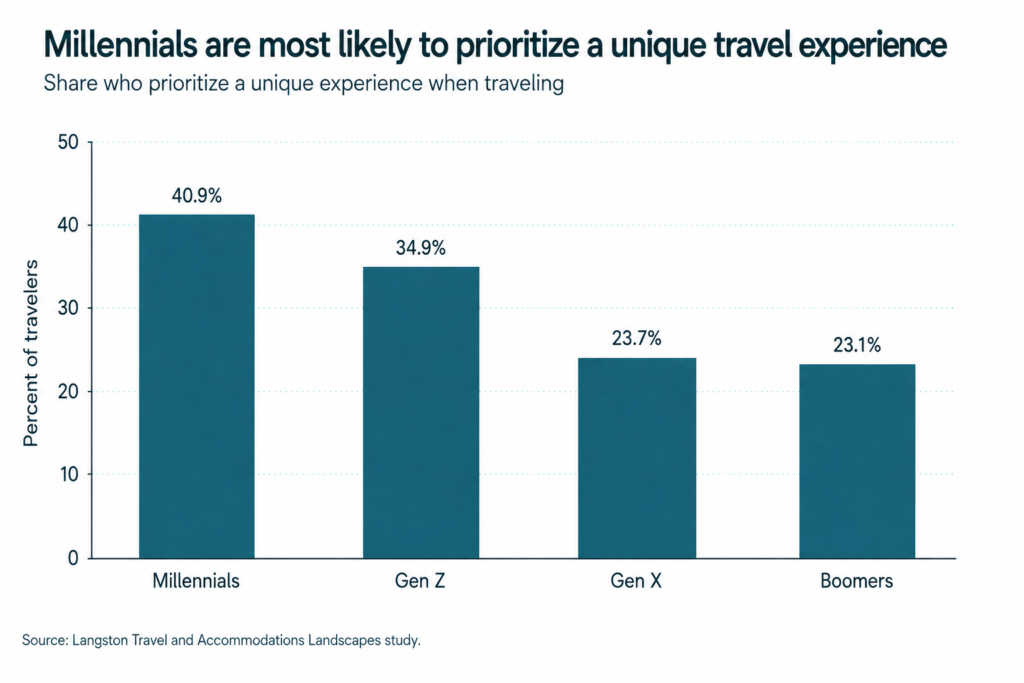
The third piece of evidence is that Millennials are more likely to prioritize unique experiences more than any other generation. The World Cup clearly delivered on that need. Its rarity and cultural significance likely made travelers more willing to relax the spending limits they might apply to a more routine trip.
Can hotel brands continue prioritizing revenue over demand?
A RevPAR-focused strategy is not without risk.
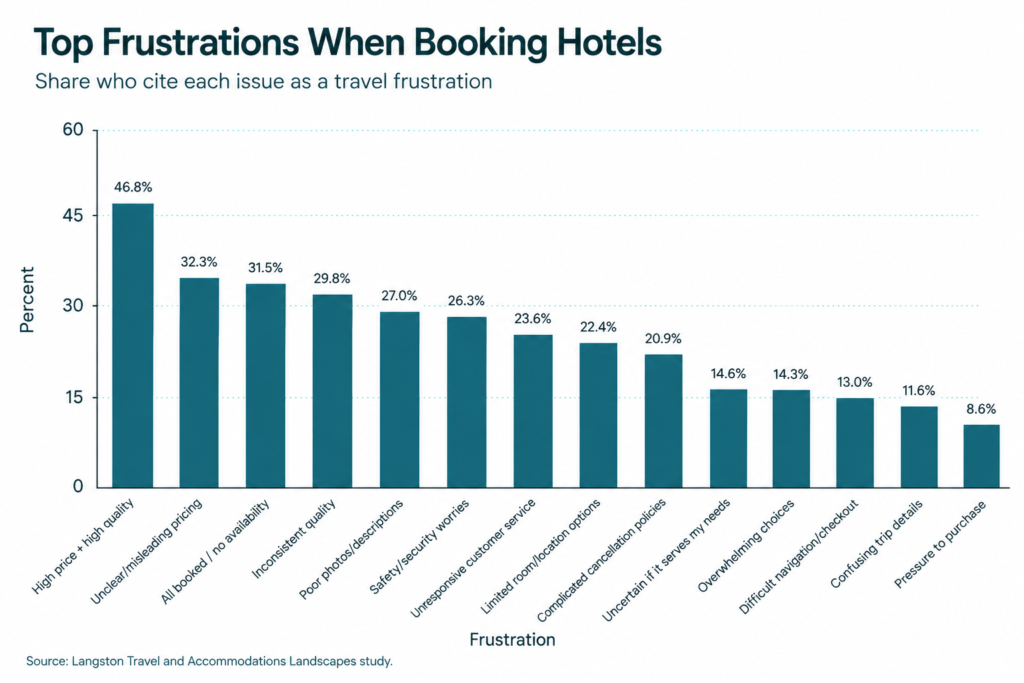
Although Millennials are comparatively less sensitive to the relationship between price and quality, high prices remain the most common travel frustration for them and every other generation.
Other leading frustrations, including unclear pricing and limited availability, may be easier to forgive during an extraordinary event like the World Cup. Consumers understand that rooms will be scarce, prices will be elevated and planning may be more difficult. Those same conditions are far less acceptable during an ordinary vacation or business trip.
For hotel brands considering their next stage of growth, prioritizing revenue over volume may remain viable as long as the K-shaped economy continues to concentrate spending power among more affluent consumers.
But the World Cup was not an ordinary travel occasion. It temporarily outweighed many of the frustrations that would normally discourage a traveler from booking. Over-rotating toward what worked during the tournament could leave hotel brands less prepared to serve the everyday traveler, particularly if economic conditions shift and today’s highest spenders become more cautious.
The World Cup demonstrated how much consumers may be willing to spend when the experience feels rare enough, meaningful enough and difficult enough to replace.
The larger opportunity for hotel brands is not simply to charge more. It is to understand which experiences justify a premium, which consumers are willing to pay it and what value must be delivered in return.
The data featured in this article comes from Langston’s Travel Landscapes study, syndicated research designed to give insights teams a deeper understanding of the consumers, behaviors and trends shaping their category.
Have a business question of your own? Whether the answer already exists within Landscapes or requires custom research, our team can help you find it. Schedule time with Langston to talk through your question.